

2026-10-22
The modern vehicle is no longer just a mechanical machine; it is a mobile data center. As automotive architectures shift toward electrification and autonomous driving, the electrical distribution system (EDS) faces unprecedented pressure. A standard, off-the-shelf wiring solution rarely suffices for the complex spatial and signal requirements of contemporary vehicle platforms.
For Tier 1 suppliers and OEM project managers, a custom automotive wire harness is the strategic solution to balance signal integrity, weight reduction, and long-term durability in harsh operating environments.
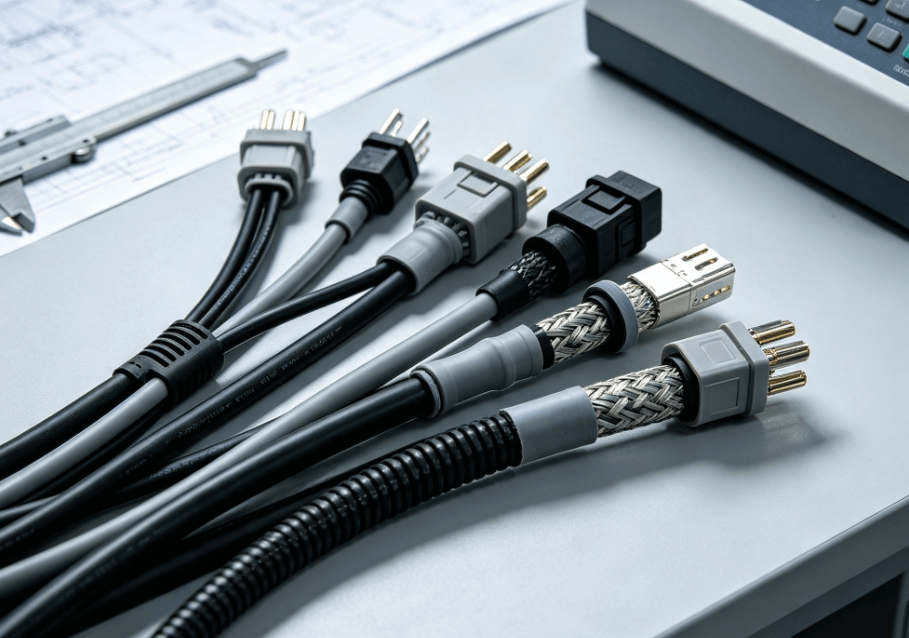
Off-the-shelf harnesses are designed for "average" conditions, which often leads to over-engineering (adding unnecessary weight) or under-engineering (risking field failures). Customization allows engineers to dictate every variable, from conductor strand count to shielding effectiveness.
In electric vehicle (EV) applications, for instance, high-voltage battery systems require specialized insulation and electromagnetic interference (EMI) shielding that standard industrial cables cannot provide. Customization ensures the harness fits the specific geometry of the chassis, reducing installation time and preventing mechanical wear caused by vibration-induced friction.
Designing a high-performance harness requires a holistic approach to the vehicle’s ecosystem. Engineers must prioritize four technical pillars:
Automotive environments are brutal. Components near the engine block or exhaust systems must withstand temperatures exceeding 125°C, while exterior sensors face sub-zero conditions.
Vehicles are subject to constant harmonic vibration and physical shock. A custom harness must account for:
With the rise of Advanced Driver Assistance Systems (ADAS), the "noise" generated by high-voltage motors can corrupt data from LIDAR or camera sensors. Custom harnesses utilize twisted-pair wiring and braided shielding to ensure clean data transmission, meeting strict electromagnetic compatibility (EMC) standards.
Connectors located in the wheel wells or under-chassis must meet IP67 or IP69K standards. Custom designs integrate specialized grommets and sealed connector housings to prevent moisture ingress, which is the leading cause of terminal corrosion.
| Feature | Standard Wire Harness | Custom Automotive Wire Harness |
|---|---|---|
| Space Optimization | Often bulky; requires "coiling" excess length | Precision routing; fits specific chassis voids |
| Weight | Heavier due to generic gauge sizing | Optimized gauge per circuit; reduces GVW |
| Signal Integrity | Basic shielding; prone to EMI issues | Application-specific shielding (Foam/Braid) |
| Regulatory Compliance | General UL/CE | IATF 16949, SAE, and OEM-specific standards |
| Manufacturing Cost | Lower per unit for low complexity | Higher initial cost, lower total lifecycle cost |
Investing in a custom-engineered harness yields significant downstream advantages that affect the bottom line.
Reduced Assembly Labor
Custom harnesses are designed for "plug-and-play" integration. By utilizing keyed connectors and branching that matches the vehicle layout exactly, assembly line workers can install systems faster with a lower margin for error. This directly reduces "Hours per Vehicle" (HPV) metrics.
Enhanced Reliability and Reduced Warranty Claims
Most electrical failures in vehicles occur at connection points or due to insulation wear. By optimizing the bend radius and utilizing application-specific terminal plating (such as gold or silver for low-voltage signals), manufacturers significantly reduce the risk of intermittent signals and field recalls.
Weight Reduction (Lightweighting)
In the era of "range anxiety" for EVs, every gram matters. Customization allows engineers to use thinner-wall insulation and precisely sized conductors based on actual current draw rather than "worst-case" generic standards. This contributes to better fuel efficiency and extended battery range.
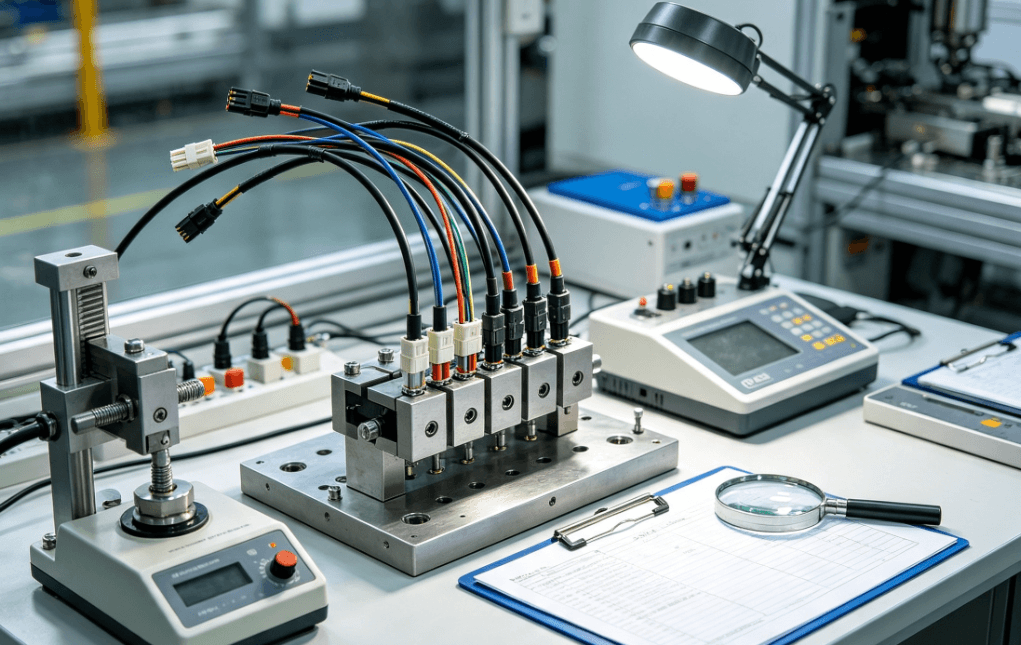
A custom automotive wire harness is only as good as the quality system behind it. At the industrial level, compliance is not optional.
For manufacturers like Soar Cable, the focus is on a vertically integrated approach. This includes rigorous testing protocols such as pull-force testing, cross-section analysis of crimps, and automated electrical testing to ensure 100% circuit integrity before the product leaves the factory floor.
When evaluating a supplier for custom automotive solutions, project managers should look beyond the per-unit price. The evaluation should focus on:
The transition toward smarter, greener vehicles demands a more sophisticated approach to electrical architecture. A custom automotive wire harness is not merely a component; it is a high-performance subsystem that determines the reliability and efficiency of the entire vehicle. By prioritizing specific design requirements—such as thermal resilience, EMI shielding, and mechanical durability—OEMs can ensure their platforms are built for the rigors of the modern road.


