

2026-09-15
The evolution of On-Board Diagnostics (OBD) represents a pivotal shift in automotive engineering. For engineers, fleet managers, and diagnostic equipment manufacturers, understanding the obd1 vs obd2 difference is not merely a matter of historical context—it is about understanding the transition from proprietary, fragmented hardware to a standardized, high-speed communication architecture.
While both systems serve the primary purpose of monitoring vehicle health and emissions, the technical gap between them involves significant changes in data processing, signal integrity, and physical connectivity.
Introduced in the early 1980s, OBD1 was the industry's first major attempt at electronic self-monitoring. However, it lacked a universal standard. During this period, manufacturers like Ford, GM, and Toyota developed their own diagnostic languages and physical interfaces.
From a manufacturing perspective, OBD1 was inefficient. If a technician wanted to scan three different car brands, they often needed three different physical diagnostic tools or proprietary adapter cables. The data provided was "low-resolution," typically only identifying major component failures rather than specific sensor deviations.
In 1996, the United States mandated OBD2 for all light-duty vehicles. This transition moved the industry toward a unified framework defined by SAE (Society of Automotive Engineers) and ISO standards. The primary objective was to ensure that a single diagnostic interface could communicate with any vehicle, regardless of the make or model.
OBD2 introduced the standardized 16-pin J1962 connector, which remains the global benchmark today. This move didn't just simplify diagnostics; it revolutionized how data is transmitted through the vehicle’s wiring harness.
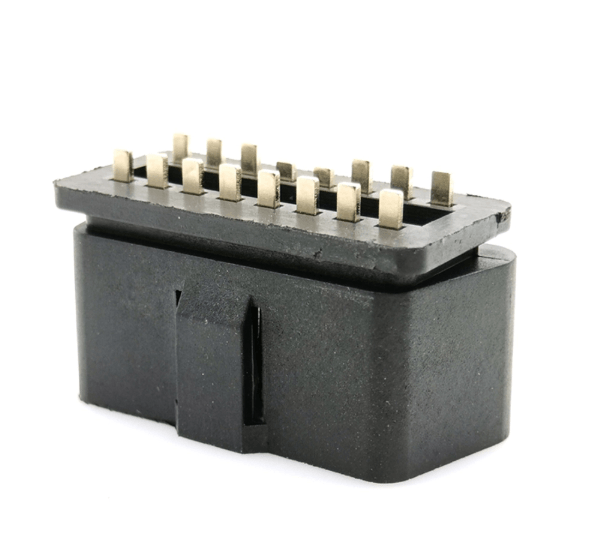
To understand the core distinctions, we must look at the physical and digital layers of these systems.
| Feature | OBD1 (Pre-1996) | OBD2 (Post-1996) |
|---|---|---|
| Connector Type | Proprietary (Various shapes/sizes) | Standardized 16-pin (SAE J1962) |
| Communication Protocol | Manufacturer-specific (ALDL, etc.) | Standardized (CAN, ISO 9141, J1850) |
| Diagnostic Codes | Simple (Often 2 digits) | Complex (P-codes, B-codes, C-codes) |
| Data Speed | Low-speed serial | High-speed (Up to 500kbps on CAN) |
| Emissions Monitoring | Basic / Component level | Continuous / Comprehensive monitoring |
| Physical Interface | Engine bay or under dash | Required within 2ft of steering wheel |
The most significant technical obd1 vs obd2 difference lies in the communication protocols. OBD1 relied on slow, often analog-leaning serial data. In contrast, OBD2 systems utilize sophisticated digital protocols, most notably the Controller Area Network (CAN bus).
In modern automotive environments, signal integrity is paramount. High-speed data transmission is susceptible to electromagnetic interference (EMI). This is why the quality of the diagnostic cable and the internal shielding of the wiring harness are critical. In industrial-grade applications, the use of twisted-pair wiring within the OBD2 assembly is standard practice to cancel out noise and ensure data accuracy during high-speed diagnostic sessions.
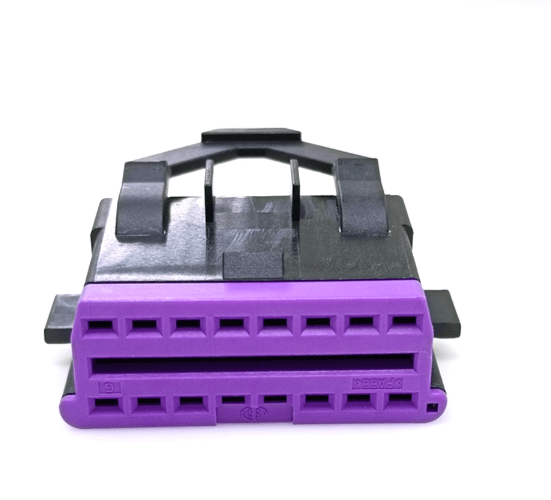
For OEM and cable manufacturers, the shift to OBD2 introduced more stringent requirements for durability and precision. Unlike the rudimentary plastic housings of early OBD1 connectors, modern OBD2 connectors must meet strict tolerances to ensure a secure "click-fit" that prevents data loss during vehicle vibration.
Manufacturers focusing on diagnostic interfaces, such as those found at Soarcable, prioritize the overmolding process and pin-plating quality. Poorly manufactured pins can lead to high resistance or intermittent connectivity, which in an OBD2 environment, can result in "ghost" Diagnostic Trouble Codes (DTCs) or communication timeouts.
Even as wireless OBD2 dongles become popular, the physical cable remains the gold standard for ECU remapping and heavy-duty diagnostics. A high-quality OBD2 cable must account for:
In the B2B sector, procurement managers often seek custom OBD2 cable solutions that include specific shielding or specialized jacket materials (like TPU for flexibility) to meet the demands of rugged diagnostic environments.
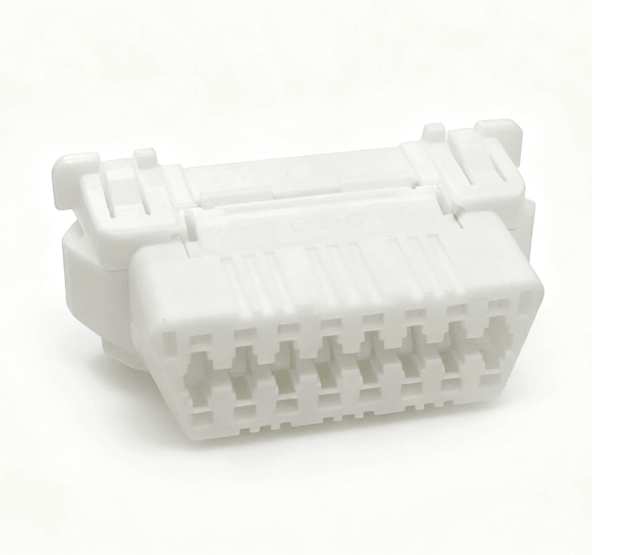
The obd1 vs obd2 difference is characterized by the move from isolation to integration. OBD1 was a diagnostic "suggestion," whereas OBD2 is a rigorous diagnostic "requirement." For modern automotive projects, the focus has shifted from "how to connect" (which OBD2 solved) to "how to maintain signal purity" across the connection.
Whether you are developing telematics hardware or sourcing replacement diagnostic harnesses, the reliability of the physical interface is the foundation of the entire digital diagnostic ecosystem.


