Evaluating BMW diagnostic cable options? Compare ENET, K+DCAN, and ICOM protocols. Learn how manufacturing quality impacts ECU flashing, coding stability, and workshop efficiency.
Selecting a professional BMW diagnostic cable requires an understanding of the evolving communication protocols used by the BMW Group, including Mercedes and Audi. In modern vehicle maintenance, the cable is no longer just a physical bridge; it is a critical component that must handle high-speed data transmission without latency or voltage fluctuations. For workshops and OEM procurement managers, the difference between a generic consumer-grade lead and a high-performance industrial solution can be the difference between a successful ECU flash and a "bricked" control module.
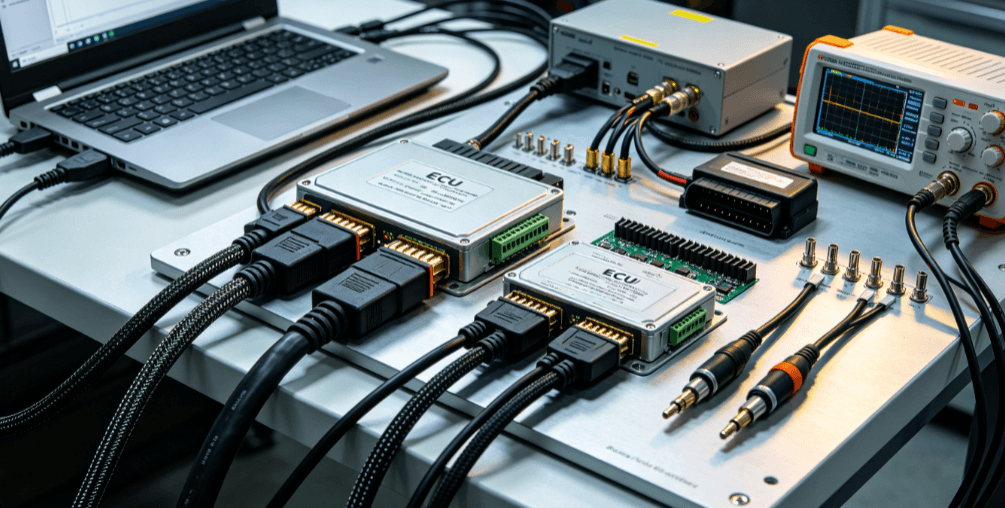
Understanding the BMW Protocol Landscape: E, F, G, and I Series
BMW vehicles utilize distinct electronic architectures depending on their production year. A single cable rarely covers the entire spectrum of diagnostic needs for a professional facility.
- K+DCAN (USB-to-OBD): Primarily utilized for E-Series models (roughly 1998–2013). This solution uses the K-line or DCAN (Double CAN) protocol. Reliability in K+DCAN cables depends heavily on the integration of a high-quality FTDI chip (usually the FT232RQ) and a physical switch for switching between older and newer E-series pinouts.
- ENET (Ethernet-to-OBD): Essential for F, G, and I Series models. This interface utilizes the DoIP (Diagnostics over IP) protocol. Unlike USB-based solutions, ENET leverages standard 10/100 Mbps Ethernet speeds, making it significantly faster for heavy coding, navigation updates, and multi-module flashing.
- ICOM (Integrated Communication Optical Module): The dealership-level hardware. While significantly more expensive, it supports MOST (optical) bus communication and provides a more stable, dedicated processing environment for ISPI Next software suites.
Technical Performance Drivers in Diagnostic Cable Manufacturing
When evaluating automotive diagnostic cables for commercial or industrial use, technical specifications must exceed standard consumer expectations. High-speed data transmission in a workshop environment is prone to Electromagnetic Interference (EMI), which can corrupt data packets during critical firmware updates.
1. Shielding and Signal Integrity
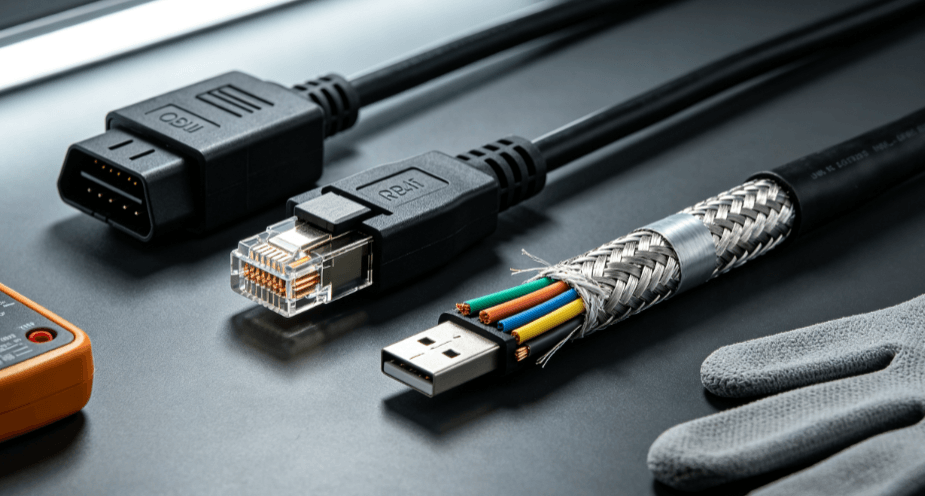
A professional-grade BMW diagnostic cable should feature multiple layers of shielding. In environments with high electrical noise—such as near running engines or workshop power tools—AL-Mag braiding or foil shielding is necessary to prevent signal degradation. This is particularly vital for ENET cables where crosstalk between twisted pairs can trigger connection drops during 2GB+ data transfers.
2. Connector Tolerance and Gold-Plating
The OBDII port is subject to repeated mechanical stress. Industrial-grade connectors, such as those found in SoarCable’s diagnostic collections, often utilize high-precision injection molding. Gold-plated pins (typically 3µ to 30µ) are preferred to prevent oxidation, which can cause intermittent resistance and lead to "Communication Error" faults in software like ISTA or ESYS.
3. Wire Gauge and Jacket Durability
For mobile technicians, the physical flexibility of the cable is as important as the electronics. Cables utilizing TPE (Thermoplastic Elastomer) jackets offer superior oil resistance and flexibility in cold temperatures compared to standard PVC. A minimum of 24 AWG for power lines and 26 AWG for data lines ensures minimal voltage drop over longer cable runs (e.g., 3-5 meters for shop-floor mobility).
Comparison: BMW vs. Mercedes vs. Audi Diagnostic Interfaces
While the physical OBDII port is standardized, the underlying communication logic varies across German manufacturers.
| Feature |
BMW (ENET) |
Mercedes (SD Connect) |
Audi/VW (VAG-COM/VCDS) |
| Primary Protocol |
DoIP / CAN-BUS |
DoIP / K-Line / CAN |
CAN / UDS / K-Line |
| Physical Interface |
RJ45 to OBDII |
Multiplexer (C4/C5/C6) |
USB to OBDII |
| Typical Use Case |
Coding & ECU Flashing |
Deep System Calibration |
Component Protection |
| OEM Standard |
IATF 16949 |
MB-Quality Standards |
ISO 9141 / 14230 |
Strategic Sourcing for B2B and OEM Projects
For distributors and automotive tool manufacturers, sourcing a BMW diagnostic cable involves more than checking a spec sheet. Real-world manufacturing logic dictates that quality control must happen at the assembly level.
Why OEM Manufacturing Expertise Matters:
In a large-volume production setting, consistent pin-to-pin continuity and strain relief testing are mandatory. Facilities like SoarCable specialize in automotive wire harnesses and OBD connectors, ensuring that every batch meets the electrical tolerances required for modern vehicle architectures. For custom projects, this includes the ability to integrate specific resistors (such as the 511-ohm resistor required for some ENET configurations) directly into the molded housing for maximum durability.
Key Procurement Metrics:
- Compliance: Ensure cables meet RoHS, CE, and REACH standards for international distribution.
- Customization: Ability to provide custom cable lengths, branded over-molding, and specialized pinouts for proprietary diagnostic tools.
- Lead Times: Industrial suppliers should provide clear timelines for sampling and mass production to align with automotive product launch cycles.
Enhancing Connection Stability: Tips for Engineers
- Voltage Stability: Always use a dedicated battery maintainer (70A+ for BMW) when using an ENET or ICOM cable for flashing. A cable cannot compensate for a vehicle battery that drops below 12.5V.
- Network Settings: For ENET cables, ensuring the laptop’s Ethernet adapter is set to "Obtain IP address automatically" (DHCP) is crucial, as the vehicle acts as the DHCP server.
- Mechanical Handling: Avoid sharp bends near the OBD head. Stress at the connector-wire junction is the most common cause of intermittent diagnostic failures.
FAQ
What is the difference between a cheap BMW ENET cable and a professional one?
Cheap cables often lack proper shielding and use low-grade copper alloys, leading to packet loss. Professional cables use high-purity copper, EMI shielding, and precision-molded OBD heads that won't damage the vehicle's pins.
Can I use a BMW diagnostic cable for Mercedes or Audi?
A standard BMW ENET cable (RJ45 to OBD) is technically a DoIP cable. While the hardware might physically fit, the software protocols (ISTA vs Xentry) are proprietary. However, some multi-vehicle DoIP interfaces are being developed for universal workshop use.
Why is my K+DCAN cable not connecting to my 2018 BMW G30?
The G30 (and all G-series models) uses the ENET (Ethernet) protocol for diagnostics. K+DCAN is limited to older E-series models and will not communicate with the newer Ethernet-based architecture.
Does SoarCable provide custom OBDII cable solutions?
Yes, as a specialized manufacturer of automotive wire harnesses and connectors, SoarCable offers OEM/ODM services, including custom lengths, specific wire gauges, and specialized connector configurations for commercial diagnostic providers.
What are the MOQ requirements for custom diagnostic cables?
MOQ (Minimum Order Quantity) typically depends on the level of customization (e.g., custom molded logos vs. standard housing). Most industrial manufacturers require 100–500 units for custom cable assemblies.
Reference Sources
- ISO 13400: Road vehicles — Diagnostic communication over Internet Protocol (DoIP). ISO Official Documentation.
- SAE J1962: Diagnostic Connector standards for automotive applications.
- IEEE 802.3: Standard for Ethernet communication (Basis for ENET/DoIP physical layers).
- IATF 16949: Quality management systems for automotive production.


