Learn how to evaluate an automotive wire harness manufacturer based on IATF 16949 standards, material quality, and testing protocols for OEM/ODM projects.
Selecting a strategic partner for automotive wiring systems is a high-stakes decision. In a modern vehicle, the wire harness serves as the central nervous system, integrating complex electronic control units (ECUs), sensors, and power distribution modules. A single failure in a crimp connection or insulation choice can lead to costly recalls or safety critical failures.
This guide outlines the technical benchmarks and manufacturing capabilities required to identify a top-tier automotive wire harness manufacturer capable of meeting rigorous industry demands.
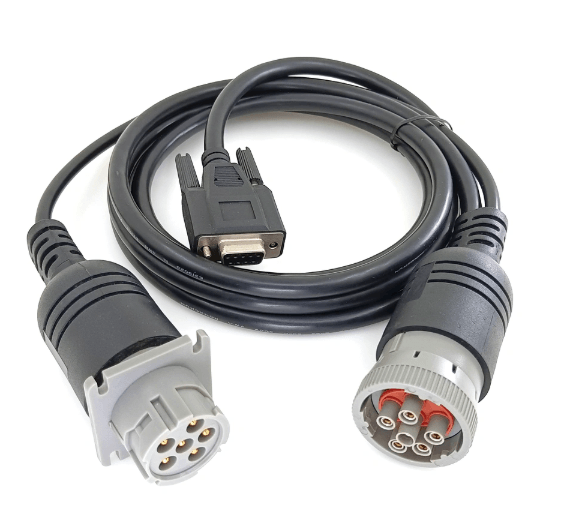
Essential Certifications: The Baseline of Automotive Quality
In the automotive sector, basic ISO 9001 certification is insufficient. A reliable manufacturer must demonstrate adherence to industry-specific quality management systems.
- IATF 16949:2016: This is the gold standard. It ensures the manufacturer follows a process-oriented quality management system focused on continuous improvement, defect prevention, and the reduction of variation and waste in the supply chain.
- IPC/WHMA-A-620: This standard governs the "Requirements and Acceptance for Cable and Wire Harness Assemblies." A manufacturer following Class 3 (High Performance/Harsh Environment Electronic Products) ensures the highest level of reliability for automotive applications.
- UL & RoHS Compliance: Necessary for ensuring flame retardancy and the absence of hazardous substances in the insulation and terminal materials.
Technical Evaluation: Material Integrity and Components
A premium automotive wire harness is only as good as its individual components. When evaluating a manufacturer, audit their supply chain and material selection process.
Connector and Terminal Sourcing
Top manufacturers typically collaborate with globally recognized component brands like TE Connectivity, Molex, JST, and Sumitomo. These brands offer validated sealing technologies and vibration-resistant locking mechanisms. If a manufacturer proposes "equivalent" house-brand connectors, ensure they provide comprehensive validation reports (e.g., USCAR-2) to prove performance parity.
Wire Insulation Types
Automotive environments vary. Your manufacturer should offer a range of insulation materials based on placement:
- Engine Bay: Requires high-heat resistance (XLPE or ETFE) to withstand temperatures up to 150°C.
- Cabin/Interior: Focuses on flexibility and weight reduction (PVC or Cross-linked PE).
- Battery/EV Systems: Requires high-voltage (HV) orange cabling with specialized electromagnetic shielding (EMI) to prevent interference with sensitive vehicle electronics.
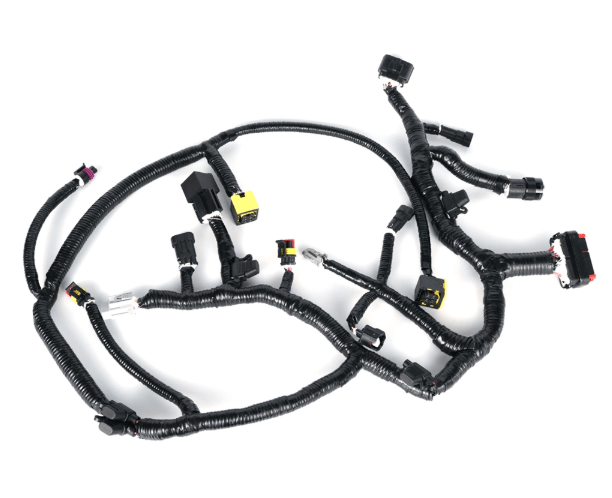
Manufacturing Capabilities and Process Control
Engineering expertise must be matched by advanced production technology. A manufacturer’s floor should feature automated equipment to minimize human error.
| Capability |
Importance in Automotive Production |
| Automated Crimp Force Monitoring (CFM) |
Detects microscopic defects in terminal crimping in real-time. |
| Ultrasonic Welding |
Essential for reliable wire-to-wire splicing without adding bulk or resistance. |
| Circuit Continuity Testing |
100% automated testing to ensure no crossed wires or open circuits. |
| Custom Overmolding |
Protects connectors from moisture ingress and provides strain relief in high-vibration zones. |
Validation and Testing Protocols
A reliable partner doesn't just assemble; they validate. Ask potential suppliers for their testing documentation. Critical automotive tests include:
- Thermal Cycling: Testing the harness's ability to maintain electrical integrity through extreme temperature fluctuations.
- Vibration Testing: Simulating road conditions to ensure terminals do not back out of housings (Terminal Secondary Lock checks).
- Salt Spray & Humidity: Crucial for harnesses located in the chassis or undercarriage to prevent corrosion.
- Pull Force Testing: Verifying that the mechanical bond between the wire and terminal meets or exceeds SAE standards.
Evaluating Customization and Prototyping
For OEM and ODM projects, the ability to transition from a CAD drawing to a functional prototype is vital. Leading manufacturers, such as those featured in the Soar Cable Automotive Wire Harness Collection, offer end-to-end support. This includes:
- DFM (Design for Manufacturing) Feedback: Identifying potential failure points in the harness layout before mass production begins.
- Rapid Prototyping: Providing low-volume runs for bench testing and vehicle integration.
- Scalability: The infrastructure to move from 100 units to 100,000 units without compromising quality consistency.
Lead Times and Supply Chain Resilience
In the post-pandemic landscape, supply chain transparency is a commercial necessity. Top manufacturers mitigate risks by:
- Maintaining safety stock of long-lead-time connectors.
- Utilizing diverse sourcing for raw copper and resins.
- Providing clear communication regarding production milestones and shipping logistics.
Conclusion: Making the Final Selection
Choosing an automotive wire harness manufacturer is about balancing cost with risk. While lower-cost suppliers may be tempting, the "hidden costs" of poor crimp quality or substandard insulation can be catastrophic in the automotive field. Prioritize manufacturers who invest in IATF 16949 compliance, automated assembly, and rigorous environmental testing.
By focusing on technical capability and material transparency, procurement managers can ensure long-term vehicle reliability and brand reputation.
FAQ
Q: What is the typical MOQ for custom automotive wire harnesses?
A: MOQs vary significantly. While some boutique manufacturers accept orders of 100–500 units for specialized racing or EV projects, Tier 1 and Tier 2 suppliers often require 5,000+ units to optimize automated setup costs. Always clarify if the manufacturer offers a "bridge production" phase for lower volumes during vehicle testing.
Q: How do manufacturers ensure harnesses fit perfectly in complex vehicle chassis?
A: Top manufacturers use 3D form-board layouts. By using full-scale physical or digital templates, they ensure branch lengths, breakout points, and mounting clips (Christmas tree clips or edge clips) align precisely with the vehicle's mounting holes.
Q: Can a manufacturer assist with EMI/EMC shielding issues?
A: Yes. For Electric Vehicles (EVs), manufacturers should offer shielded cables (braided copper or foil) and specialized backshells for connectors to prevent electromagnetic interference from affecting the CAN bus or infotainment systems.
Q: What is the standard lead time for an initial prototype?
A: If components are in stock, prototypes can often be delivered in 2–4 weeks. However, if specialized automotive connectors (e.g., from TE or Deutsch) have a 20-week lead time, the prototype schedule will be affected accordingly.
Reference Sources


