2026-11-27

Medical cable flex life describes how an assembly withstands repeated bending under defined test conditions. It is not a universal number that can be compared without context. Bend radius, angle, speed, tension, cable routing, temperature and failure criteria all influence the result.
A flex test applies a defined movement to a cable or assembly and monitors for a specified failure or performance change. Depending on the test, failure may mean conductor breakage, intermittent continuity, insulation damage, shield discontinuity or a change in electrical performance.
The result is meaningful only when the method is documented. A cycle count without bend radius, movement angle, load, sample construction and monitoring method is incomplete. Two cables tested under different conditions cannot be ranked fairly by cycle count alone.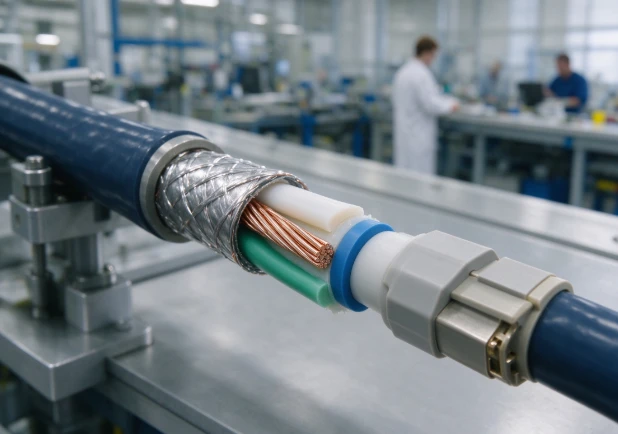
Conductor strand count and strand diameter affect flexibility and fatigue behavior. Insulation material, conductor lay, pair arrangement, shield type, filler, jacket and overall diameter also influence how the cable moves. The connector transition can become the limiting point even when the cable body performs well.
Routing is equally important. A tight bend near a connector, an unsupported cable span or a clamp that compresses the jacket can concentrate stress. For reusable medical equipment, handling patterns and storage practices should be considered alongside laboratory test results.
Build the test around the intended application. Define the bend radius, travel or angle, cycle speed, tension, cable orientation, ambient conditions and sample count. State whether the cable is tested alone or with its connectors, strain relief and overmold.
Choose monitoring appropriate to the failure mode. Continuous electrical monitoring can identify intermittent opens that a final continuity check may miss. Visual inspection and post-test electrical measurements can reveal insulation, shield or jacket damage. Acceptance limits should be agreed before testing begins.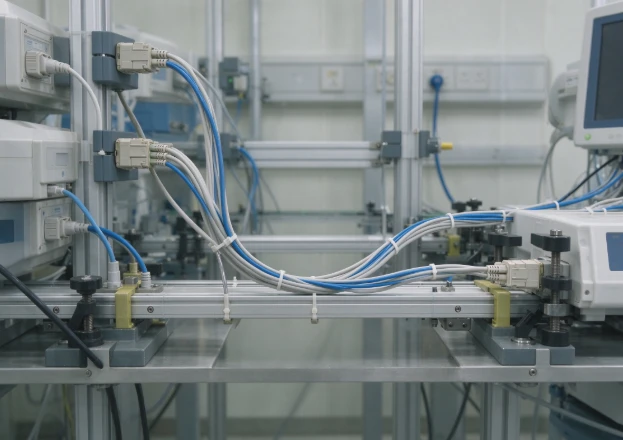
A test result supports a defined design under a defined condition; it does not guarantee a fixed service life in every clinical environment. Real use may include twisting, cleaning, pulling, temperature changes and accidental misuse that are absent from a simple bend rig.
Use flex-life evidence as one part of design verification. Compare test conditions with the device's use profile, review failure locations and assess whether the test reproduces the actual stress. If the design changes, determine whether the previous result remains representative.
Request the test method, setup drawing, bend radius, motion profile, cycle definition, sample construction, sample count, monitoring method, acceptance criteria and raw or summarized results. Ask whether the tested samples match the production BOM and tooling revision.
SOAR's medical cable collection and company news page provide category and technical content context. For a specific cable, obtain the relevant test report and confirm the test configuration before relying on a published durability statement.
Is flex life the same as bend radius?
No. Bend radius describes geometry; flex life describes performance under repeated movement using a defined test method.
Can a cable's flex-cycle result predict its exact service life?
No. Field conditions, installation, cleaning, twisting and handling may differ from laboratory test conditions.
Should the connector be included in flex testing?
If the connector transition experiences movement in service, testing the finished assembly is often more representative than testing cable alone.